

Fun Ways to Incorporate Learning Into Everyday Activities That Spark Passion in Kids

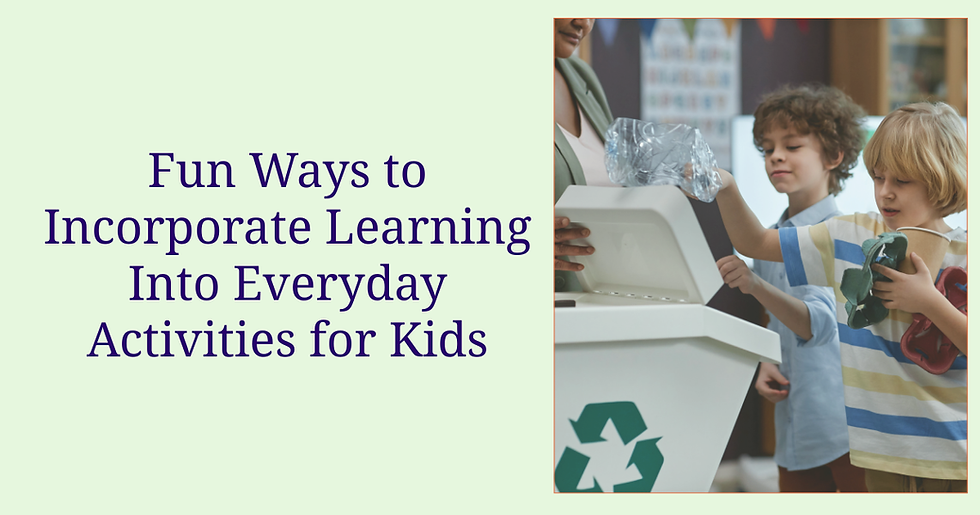
Learning does not only happen at a desk, during homework time, or inside a classroom.
Some of the most meaningful learning happens when kids feel connected to what they are doing, curious about the world around them, and empowered to take part in something bigger than themselves. Real-world activities give kids opportunities to practice critical thinking, communication, problem solving, and empathy in ways that feel natural and engaging.
When learning feels purposeful, kids are more motivated, confident, and open to growth.
Learning Through Real-World Experiences
Everyday activities offer powerful learning opportunities when kids are invited to participate instead of just observe. Community challenges, family projects, volunteering, and environmental awareness activities all help children see how their choices and actions matter.
These experiences allow kids to:
Ask questions and explore new ideas
Practice responsibility and follow-through
Build awareness of their role in the community
Connect learning to real outcomes
This type of learning helps children understand that education is not just about getting answers right, but about engaging with the world thoughtfully and responsibly.
Why Purpose Sparks Motivation in Kids
Kids are far more engaged when they understand why something matters.
Purpose builds intrinsic motivation. When children feel that their actions have meaning, they are more likely to stay curious, take initiative, and persevere through challenges. This applies not only to real-world activities, but also to academic learning.
When learning is connected to a larger purpose, it becomes less about pressure and more about growth.
Making Learning Feel Fun and Doable at Home
Real-world learning does not need to be complicated or overwhelming. Small, low-pressure activities can have a big impact.
Some helpful reminders for families:
Focus on participation, not perfection
Keep conversations open-ended
Let kids lead with curiosity
Celebrate effort and awareness
Learning sticks best when kids feel safe to try, ask questions, and reflect.
A Simple Way to Explore Civic Responsibility Together
One example of real-world learning many families are participating in right now is the Washington County Plastic Free Challenge. This challenge encourages families to notice daily habits, explore small changes, and talk together about how individual actions impact the community and environment.
Participating in a community challenge like this gives kids a chance to:
Practice awareness and responsibility
Learn about environmental impact in an age-appropriate way
Feel empowered to contribute through small actions
Families can learn more or join the challenge here:👉 https://tcplasticfree.ecochallenge.org/participants/join
For families looking for additional ideas to support learning through reading and activities, this resource from the Plastic Pollution Coalition offers thoughtful book suggestions, activities, and conversation starters designed to involve the whole family:👉 https://www.plasticpollutioncoalition.org/blog/2018/5/3/how-to-talk-to-your-kids-about-plastic-pollution-cartoons-books-and-activities-to-involve-the-whole-family
Resources like these can help turn curiosity into meaningful family learning moments.
Encouraging a Love of Reading Along the Way
Reading plays an important role in helping kids explore interests, build understanding, and connect with the world around them. When reading is connected to topics kids care about, it feels more engaging and relevant.
Exploring books related to community, science, the environment, or civic responsibility can:
Build background knowledge
Strengthen comprehension skills
Encourage thoughtful discussion
Reinforce that reading has purpose beyond school
The goal is not to assign more reading, but to make reading part of learning that feels exciting and meaningful.
Learning Beyond the Classroom
At Keep It Up Tutoring, we believe learning is most powerful when kids feel confident, curious, and supported. Whether learning happens through academics, conversations, or real-world experiences, the same principles apply: patience, purpose, and encouragement matter.
When kids are given opportunities to connect learning to their lives, they are more likely to develop confidence, passion, and a lifelong love of learning.


Comments